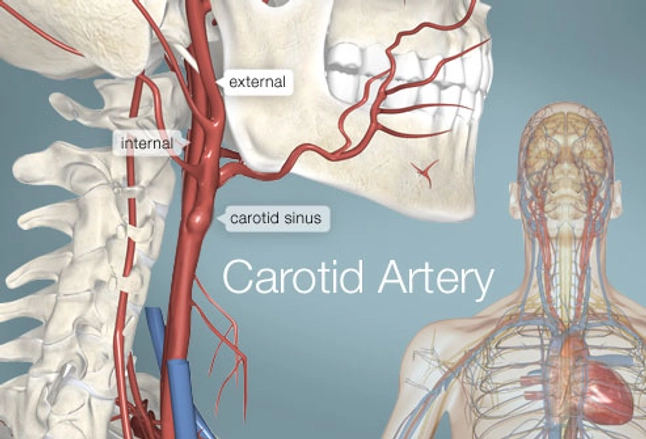
Arteries In Neck : arteries in neck and head : The carotid arteries supply blood to the large, front part of the brain, where thinking, speech, personality and sensory and motor functions reside.
Arteries In Neck : arteries in neck and head : The carotid arteries supply blood to the large, front part of the brain, where thinking, speech, personality and sensory and motor functions reside.. A large artery that arises on each side of the neck, the common carotid artery is the primary source of oxygenated blood for the head and neck. The carotid arteries supply blood to the large, front part of the brain, where thinking, speech, personality and sensory and motor functions reside. Posterior auricular artery passes superiorly behind the external auditory meatus. The internal carotid artery (latin: As a result, you may not experience any symptoms or signs of.
Posterior auricular artery passes superiorly behind the external auditory meatus. While mild tortuous artery may not produce any symptom, severe. There are two internal carotid arteries in total, one on each side of the neck. Learn more about causes, risk factors, screening and prevention, signs and symptoms, diagnoses, and treatments for carotid artery disease, and how to participate in clinical trials. They divide in the neck to form the external and internal carotid arteries.
If an abnormal sound, called a bruit, is heard over an artery, it may reflect turbulent blood flow.
The internal carotid artery is a major branch of the common carotid artery, supplying several parts of the head with blood, the most important one being the brain. The position of the branched carotid arteries is where a person can feel the pulse in their neck, just under the jaw. • external carotid artery terminates where it becomes the: You will now disarticulate the sternoclavicular joint and identify the structures located at the root of the neck. The internal carotid artery (latin: Common carotid arteries travel superiorly in the neck in the carotid sheath in close proximity to the jugular veins, vagus nerve, and recurrent laryngeal the sample volume is placed above the vessel, close to the root of the neck, in order to get a waveform from the common carotid artery and to avoid. There are two internal carotid arteries in total, one on each side of the neck. The right and left subclavian arteries give rise to the thyrocervical trunk. The external carotid artery provides blood supply to the scalp, face, and neck while the internal carotid artery supplies blood to the brain. They originate from the carotid bifurcation, travel through the. While both right and left arteries run the same course in the neck, they have differing origins. When you need a screening test—and when you don't. Blocked arteries in neck, produce symptoms only when the blockage is severe.
Severe twisting of arteries in the neck may lead to kinking which may occlude and hamper proper blood flow causing ischemic attack in brain. The internal carotid artery (latin: The carotid arteries can be felt on each side of the lower neck, immediately below the angle of the jaw. While mild tortuous artery may not produce any symptom, severe. Carotid endarterectomy involves opening the carotid arteries in your neck and removing the inner lining that is damaged by.

Your doctor may listen to the arteries in your neck with a stethoscope.
They supply oxygen to the parts of the brain that control our movements and our ability to think, speak and experience our senses of touch, taste, sight, sound and feel. There are two internal carotid arteries in total, one on each side of the neck. Because arteries are moving blood being pumped out by the heart, the walls of arteries are thicker and more elastic than those of veins. While both right and left arteries run the same course in the neck, they have differing origins. In human anatomy, they arise from the common carotid arteries where these bifurcate into the internal and external carotid arteries at cervical vertebral level 3 or 4. Let us understand in detail, what are these symptoms like, from the however, neck arteries can work just as fine, even though they are partially blocked. The right and left subclavian arteries give rise to the thyrocervical trunk. The latter is less invasive, but some research is… Carotid endarterectomy involves opening the carotid arteries in your neck and removing the inner lining that is damaged by. It supplies the thyroid gland. Two large arteries flow from the heart up the sides of the neck and into the brain. Common carotid arteries travel superiorly in the neck in the carotid sheath in close proximity to the jugular veins, vagus nerve, and recurrent laryngeal the sample volume is placed above the vessel, close to the root of the neck, in order to get a waveform from the common carotid artery and to avoid. The external carotid artery provides blood supply to the scalp, face, and neck while the internal carotid artery supplies blood to the brain.
They supply oxygen to the parts of the brain that control our movements and our ability to think, speak and experience our senses of touch, taste, sight, sound and feel. The internal carotid artery is a major branch of the common carotid artery, supplying several parts of the head with blood, the most important one being the brain. Your doctor may listen to the arteries in your neck with a stethoscope. The external carotid artery provides blood supply to the scalp, face, and neck while the internal carotid artery supplies blood to the brain. From this trunk, several vessels arise, which go on to supply the neck.

There are seven segments according to bouthillier classification:
While both right and left arteries run the same course in the neck, they have differing origins. View risks, prognosis, videos and what to expect when considering this procedure. When you need a screening test—and when you don't. In human anatomy, they arise from the common carotid arteries where these bifurcate into the internal and external carotid arteries at cervical vertebral level 3 or 4. /kəˈrɒtɪd/) are arteries that supply the head and neck with oxygenated blood; There are seven segments according to bouthillier classification: There are two large arteries in the neck, one on each side. The internal carotid artery (latin: There are two internal carotid arteries in total, one on each side of the neck. From this trunk, several vessels arise, which go on to supply the neck. The right and left subclavian arteries give rise to the thyrocervical trunk. The carotid arteries supply blood to the large, front part of the brain, where thinking, speech, personality and sensory and motor functions reside. Arteria carotis interna) is located in the inner side of the neck in contrast to the external carotid artery.


Komentar
Posting Komentar